


 SN
 CEMAC


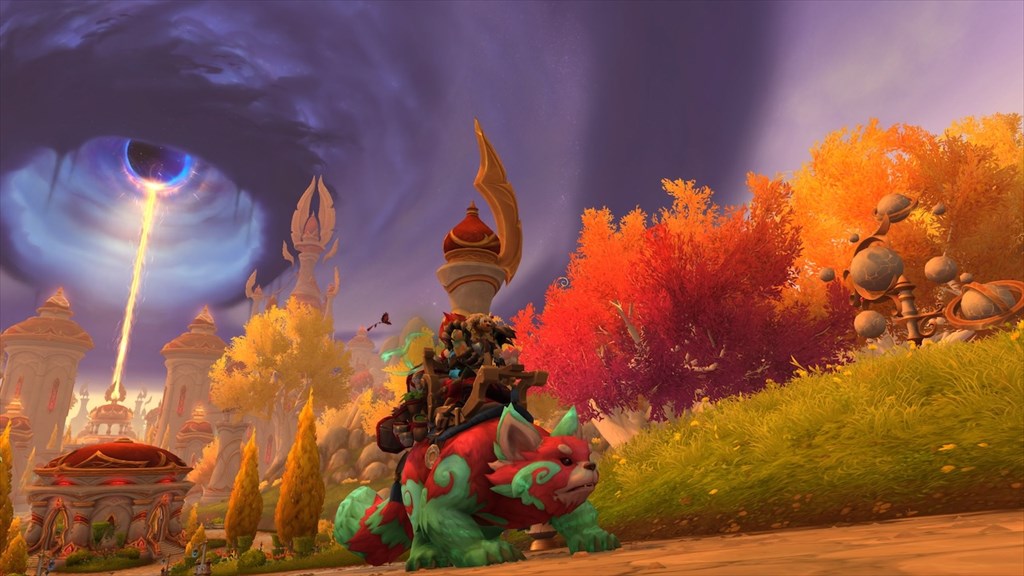
Virtual economies operate in fictional environments, yet many of the principles governing them are the same as those found in real markets. Supply, demand, resource scarcity, and the cost of acquisition all influence how value is established. World of Warcraft: Forever, Blizzard's new permanent version of the game built around the original Classic experience, provides an interesting example. Its slower progression model makes gold a relatively scarce and difficult-to-obtain resource, while its importance to everyday transactions gives it a central role in the virtual economy. The result is an environment where the availability of currency directly influences how players spend, trade, and allocate their resources.
Scarcity as the Starting Point
A resource becomes scarce when demand exceeds the amount readily available. It does not necessarily have to be rare in absolute terms; what matters is whether the available supply is sufficient to meet the needs of those who depend on it.
WoW Forever gold illustrates this relationship particularly well. Drawing on the Classic framework, the game retains a slower approach to progression than modern versions of World of Warcraft. Currency rewards from individual quests and routine activities are relatively modest, while the costs of developing a character are considerably higher. This creates a persistent tension between income and expenditure and requires more deliberate management of financial resources.
Supply, Demand and the Price of Convenience
Gold is needed for equipment, consumables, training, travel, and other expenses that support progression. These needs create demand, while the limited amount of currency in circulation influences purchasing decisions. When a resource is difficult to obtain, players must decide how to allocate what they have. They may save for an important purchase, spend on an immediate improvement, or postpone an expense until they have built a larger reserve.
Gold's value is linked not only to what it can buy, but also to what a player gives up to obtain it. A purchase may save time or make a task more manageable, but it reduces the buyer's financial reserves, while holding on to gold may provide greater flexibility later. In this sense, the currency represents both purchasing power and accumulated effort.
Time Has an Economic Cost
One of the defining characteristics of a Classic-inspired economy is that earning currency requires a meaningful investment of time. Completing quests, gathering resources, producing goods, and participating in other activities all generate opportunities to accumulate gold, but none provides an unlimited supply.
This introduces a concept familiar to economics: opportunity cost. It describes the value of the next-best alternative sacrificed when a particular choice is made. In practical terms, time spent gathering materials cannot simultaneously be used to complete other activities or develop a different source of income.
Players do not simply exchange gold for goods; they also exchange time for gold. In WoW Forever, where building a substantial gold reserve can require sustained effort, these trade-offs become an important part of economic behaviour. Currency acquisition is not separate from progression. It competes with other activities for the same limited resource that every player has in equal daily supply: time.
A Market Shaped by Player Behaviour
Virtual economies are not governed by mechanics alone. They are also shaped by the decisions of the people who participate in them. Some players concentrate on gathering and producing materials, while others devote more attention to acquiring equipment or completing challenging content. Rather than obtaining everything independently, participants can exchange the results of their efforts through the market. A resource that has little immediate value to one person may be essential to another.
This division of activity makes the in-game Auction House more than a convenient trading platform. It connects different forms of production and demand, allowing players to benefit from one another's efforts. It also creates interdependence: access to certain goods may depend on the availability and willingness of other participants to supply them.
The same principle underpins specialisation in larger economies. Individuals and businesses concentrate on activities where they can make the most effective use of their resources, then exchange their output for what they cannot or do not wish to produce themselves.
Currency Supply and Economic Balance
If currency enters the economy faster than goods become available, its purchasing power can decline. More gold competes for the same quantity of resources, potentially pushing prices upwards. This is the basic mechanism behind monetary inflation. Conversely, if currency generation remains limited relative to demand, spending decisions may become more deliberate, and the currency may retain greater significance in everyday transactions.
The balance between these processes is important for the long-term health of any virtual marketplace. Changes to rewards, available content, or recurring expenses can affect how much gold players hold and how they use it. Even adjustments that appear minor from a gameplay perspective may have wider economic consequences when multiplied across a large population.
Of course, an in-game currency is not equivalent to money in a national economy. Its use is confined to a system governed by the game's rules, and it does not provide an independent claim on real-world goods or services. Nevertheless, the mechanisms that influence its purchasing power offer a useful illustration of monetary principles.
What Virtual Economies Can Teach Us
WoW Forever illustrates how scarcity can shape an entire economic system. Limited currency supply encourages players to specialise, trade, and make deliberate decisions about how they use their resources. Gold becomes more than a means of payment: its availability influences the pace of progression and the relationships between market participants.
Ultimately, the strength of this Classic-inspired economy lies in a simple principle: currency has little meaning without purchasing power, and purchasing power depends on how much of it is available relative to demand. Even in a virtual world, scarcity remains one of the fundamental forces shaping economic value.
Publié le 06/11/26 08:16
La Rédaction